
IT - COPPER & OPTICAL FIBER
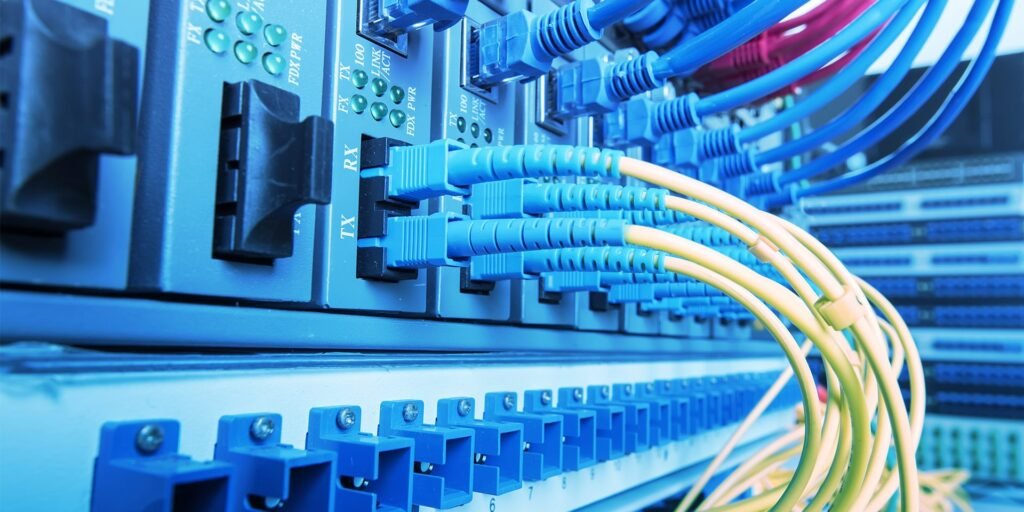
Ultra Electronics: Delivering Seamless Support and Reliable Services for IT Infrastructure Solutions
Ultra Electronics provides expert, end-to-end services to support IT “Systems Integrators” specializing in copper and optical fiber cable systems.
Our reliable and high-quality solutions ensure seamless project execution, including:
- Equipment Installation: Precise and efficient setup of critical IT hardware and devices.
- Equipment Rack Assembly: Custom-built, organized, and robust rack solutions for optimal system performance.
- Cable Laying: Professional installation of copper and optical fiber cables for high-speed, reliable connectivity.
- Termination Services: Secure and accurate terminations to ensure robust signal integrity and system reliability.
- Pre-Testing & Commissioning Support: Comprehensive testing and commissioning to guarantee flawless system operation and performance.
Ultra Electronics (Support Services) is committed to empowering IT systems integrators with dependable, high-quality services, ensuring your projects are completed with precision and efficiency.
Overview of Testing Standards for IT Copper and Optical Fiber Networks
Testing standards ensure the quality, performance, and interoperability of copper and optical fiber networks.
Below is a concise summary of key standards relevant to Ultra Electronics’ services, based on industry-recognized guidelines:
Copper Network Testing Standards
- Governs copper cabling (e.g., Cat5e, Cat6, and Cat7) for commercial buildings.
- Specifies tests like insertion loss, return loss, near-end crosstalk (NEXT), and wire map for verifying cable performance.
- Tier 1 testing includes continuity, length, and attenuation; Tier 2 includes optional tests like fault location using TDR (Time Domain Reflectometer).
- International standard for generic cabling systems (copper and fiber).
- Defines performance classes (e.g., Class E for Cat6, Class F for Cat7) and tests for attenuation, crosstalk, and propagation delay.
- Aligns with TIA-568 but includes additional requirements for global applications.
- Specifies testing procedures for installed copper cabling, including insertion loss, return loss, and crosstalk measurements.
Optical Fiber Network Testing Standards
- Covers optical fiber cabling and components for premises networks.
- Tier 1 testing: Measures insertion loss, link length, and polarity using an Optical Loss Test Set (OLTS).
- Tier 2 testing: Optional, uses Optical Time Domain Reflectometer (OTDR) for fault location, splice loss, and connector performance.
- Defines testing for optical fiber cabling in customer premises.
- Includes insertion loss, optical return loss (ORL), and OTDR testing for multimode and single-mode fibers.
- Specifies requirements for test equipment and procedures to ensure accuracy.
- Multimode fiber attenuation testing, including encircled flux measurements for consistent results.
- Single-mode fiber attenuation and return loss testing, specifying methods like LSPM (Light Source and Power Meter) and OTDR.
- Insertion Loss (IL): Measures signal loss through cables, connectors, or splices using OLTS.
- Optical Return Loss (ORL): Assesses reflected light that can degrade signal quality.
- OTDR Testing: Identifies faults, splices, and connector losses by analyzing reflected light pulses.
- Visual Fault Locator (VFL): Detects breaks or faults using visible light.
- Tools: OLTS (e.g., Fluke CertiFiber Pro), OTDR (e.g., VIAVI Smart OTDR), VFL.
IT - COPPER & OPTICAL FIBER
Ultra Electronics: Delivering Seamless Support and Reliable Services for IT Infrastructure Solutions
Ultra Electronics provides expert, end-to-end services to support IT “Systems Integrators” specializing in copper and optical fiber cable systems.
Our reliable and high-quality solutions ensure seamless project execution, including:
- Equipment Installation: Precise and efficient setup of critical IT hardware and devices.
- Equipment Rack Assembly: Custom-built, organized, and robust rack solutions for optimal system performance.
- Cable Laying: Professional installation of copper and optical fiber cables for high-speed, reliable connectivity.
- Termination Services: Secure and accurate terminations to ensure robust signal integrity and system reliability.
- Pre-Testing & Commissioning Support: Comprehensive testing and commissioning to guarantee flawless system operation and performance.
Ultra Electronics (Support Services) is committed to empowering IT systems integrators with dependable, high-quality services, ensuring your projects are completed with precision and efficiency.
Overview of Testing Standards for IT Copper and Optical Fiber Networks
Testing standards ensure the quality, performance, and interoperability of copper and optical fiber networks.
Below is a concise summary of key standards relevant to Ultra Electronics’ services, based on industry-recognized guidelines:
Copper Network Testing Standards
- Governs copper cabling (e.g., Cat5e, Cat6, and Cat7) for commercial buildings.
- Specifies tests like insertion loss, return loss, near-end crosstalk (NEXT), and wire map for verifying cable performance.
- Tier 1 testing includes continuity, length, and attenuation; Tier 2 includes optional tests like fault location using TDR (Time Domain Reflectometer).
- International standard for generic cabling systems (copper and fiber).
- Defines performance classes (e.g., Class E for Cat6, Class F for Cat7) and tests for attenuation, crosstalk, and propagation delay.
- Aligns with TIA-568 but includes additional requirements for global applications.
- Specifies testing procedures for installed copper cabling, including insertion loss, return loss, and crosstalk measurements.
Optical Fiber Network Testing Standards
- Covers optical fiber cabling and components for premises networks.
- Tier 1 testing: Measures insertion loss, link length, and polarity using an Optical Loss Test Set (OLTS).
- Tier 2 testing: Optional, uses Optical Time Domain Reflectometer (OTDR) for fault location, splice loss, and connector performance.
- Defines testing for optical fiber cabling in customer premises.
- Includes insertion loss, optical return loss (ORL), and OTDR testing for multimode and single-mode fibers.
- Specifies requirements for test equipment and procedures to ensure accuracy.
- Multimode fiber attenuation testing, including encircled flux measurements for consistent results.
- Single-mode fiber attenuation and return loss testing, specifying methods like LSPM (Light Source and Power Meter) and OTDR.
- Insertion Loss (IL): Measures signal loss through cables, connectors, or splices using OLTS.
- Optical Return Loss (ORL): Assesses reflected light that can degrade signal quality.
- OTDR Testing: Identifies faults, splices, and connector losses by analyzing reflected light pulses.
- Visual Fault Locator (VFL): Detects breaks or faults using visible light.
- Tools: OLTS (e.g., Fluke CertiFiber Pro), OTDR (e.g., VIAVI Smart OTDR), VFL.